The Last Stand Anne co-op: one road to the lighthouse
The first chapter runs thirty-four thousand units, the longest in the server data. Supply planning beats aim here.
Learn the pace before the route
At a normal Anne co-op pace, you cover roughly 3% to 5% of the flow between waves. Treat a chapter as 100%: door to saferoom costs 20 to 30 waves.
Each chapter below is split by flow percentage. To see the spawns for a stretch, click the link at the end of that chapter. The visualizer loads the map and places the whole team at that progress.
c14m1 Junkyard: thirty-four thousand units
Thirty-four thousand units of Nav flow, the longest chapter in the server data. At 3% to 5% per wave, the push alone runs 25 to 35 waves, ten more than a normal chapter. Split kits and throwables for an extended game. In the first half, anything movement can solve should not cost supplies.
The seaside town, the junkyard, and the forest road play nothing alike: corners in town, wrecked-car piles full of high spots and gaps in the yard, spread on the road. Re-call positions at every terrain change.
- Hold spots
- Clear waves in the gaps of the wrecked-car piles with a car body at your back; call positions again at every terrain change before moving on.
- Segment plan
- First half (~15 waves): density runs high through 10–50%, clear the town and junkyard section by section. Middle (~10 waves): 70–80% is dense but nearly flat — Chargers and horde pushing at ground level are the threat. Last 20% (~8 waves): forest road finish, call positions again at every terrain change.
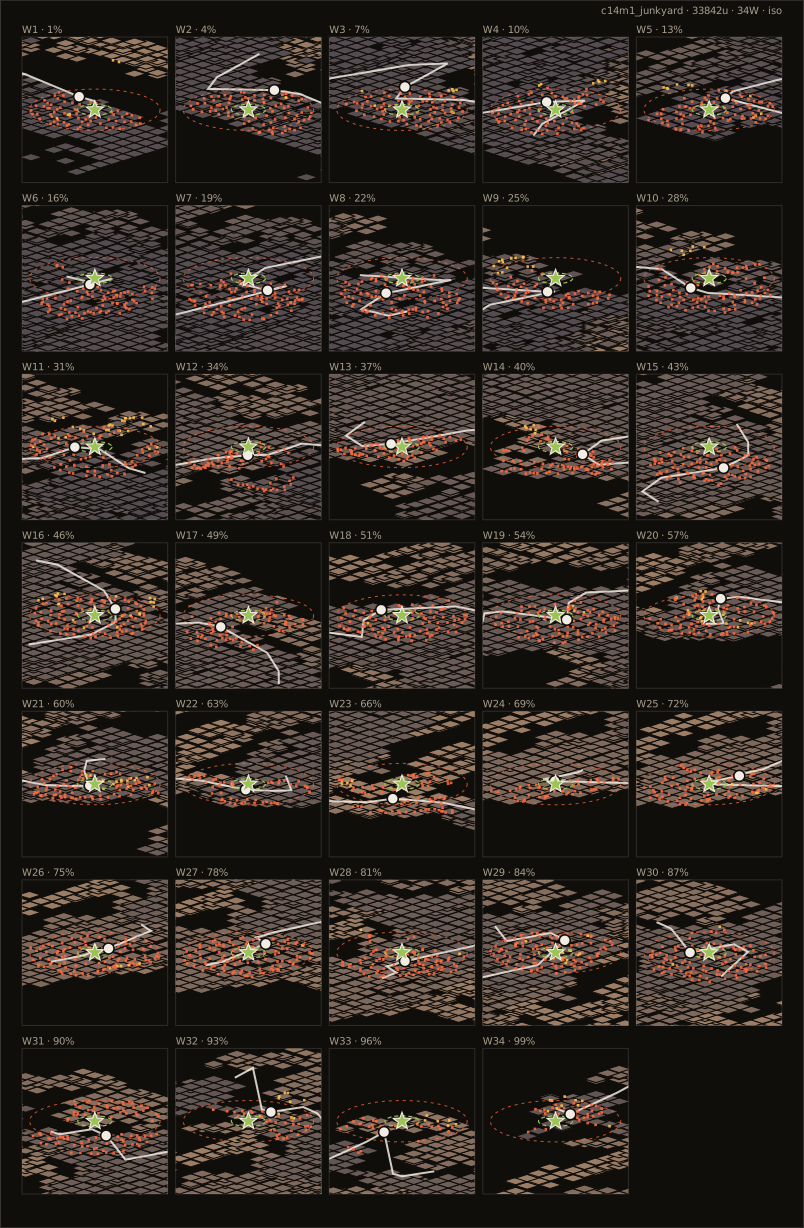
Open this chapter in the spawn visualizer
Explore this chapter interactively: drag survivors, scrub progress, and spawn waves in the live simulator
c14m2 Lighthouse: push ten thousand units, then hold
Do not treat this as a pure hold chapter. There are ten thousand units of pushing before the lighthouse, with plenty of single-file spots on the rocks and shore path. The hold only starts at the lighthouse.
The lighthouse leaks from every side and the waves are event-driven. Stagger among rock piles and hut corners, two on the ramp, two on the sea side. A Tank on the shore rocks has no cover to circle, so keep gas and molotovs untouched until it shows.
- Hold spots
- Stagger among the rock piles and hut corners, two watching the ramp and two the sea side; keep the oil untouched until the Tank shows.
- Segment plan
- Push (~8 waves): on the 40–60% cliff stretch nearly every candidate is overhead — the hardest walk on the map. Setup: the lighthouse zone at 80–100% is the densest, sweep the area before settling in. Rotation: two staggered pairs at the rock piles and hut, oil saved for the Tank.
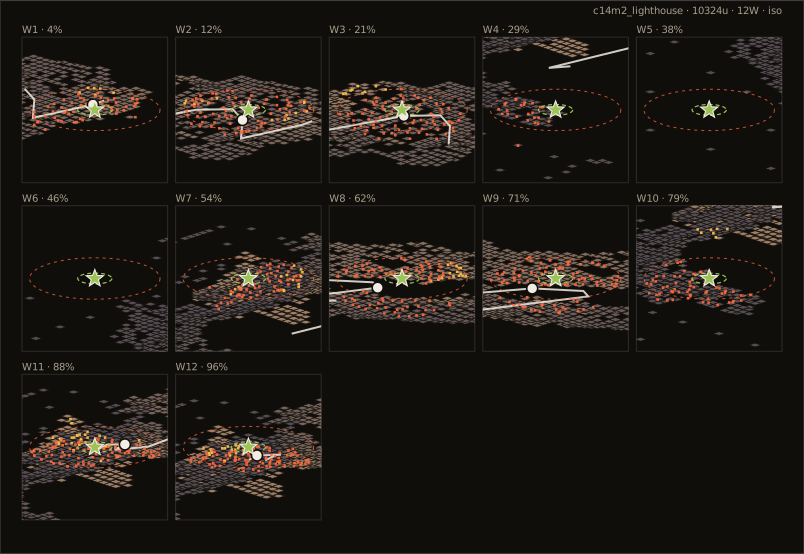
Open this chapter in the spawn visualizer
Explore this chapter interactively: drag survivors, scrub progress, and spawn waves in the live simulator
What 34,000 units actually means
That number is not a boast. It directly changes how you budget: taking 25 to 35 waves in one chapter means that if you play it like a normal chapter, your medkits run out around the 60% mark with a dozen more waves still to come in the remaining 40%.
| Flow position | Ideal state |
|---|---|
| Leaving the saferoom | All four at full health and ammo, at least three medkits, throwables spread across three people |
| 30% | No medkit used yet, at most one throwable spent |
| 50% | At least two medkits left. One left means the first half cost too much |
| 70% | Black-and-white players have healed, one or two throwables held back for the forest road |
| Just before the saferoom | Stop saving — spend whatever you can |
If you cannot match this, it is usually not bad luck but that the first half handled trouble expensively — spending supplies on things movement and focused fire could have solved. That is exactly what long chapters test.
Three terrains, three formations
The reason this map claims so many runs is that the terrain changes three times within one chapter while most teams use the same formation from start to finish.
- The seaside town
- Dense houses and many corners — Boomer territory. Do not walk abreast; hug one side and pause a beat before opening a door.
- The junkyard
- The wreck piles are both cover and high ground, and Hunters and Smokers will enter from the roofs. Look up more often, stand near the bodies but not flush against them, and leave yourself room to turn.
- The forest road
- Sight lines open up suddenly and the spread most easily goes over. Tighten the formation deliberately here — seeing far is not a reason to relax.
At each transition, the point man calling something like "entering the junkyard" beats any tactic — it makes the other three adjust at the same moment.